If you’re thinking about selling your home in Northeast Tennessee, you’ve probably asked:
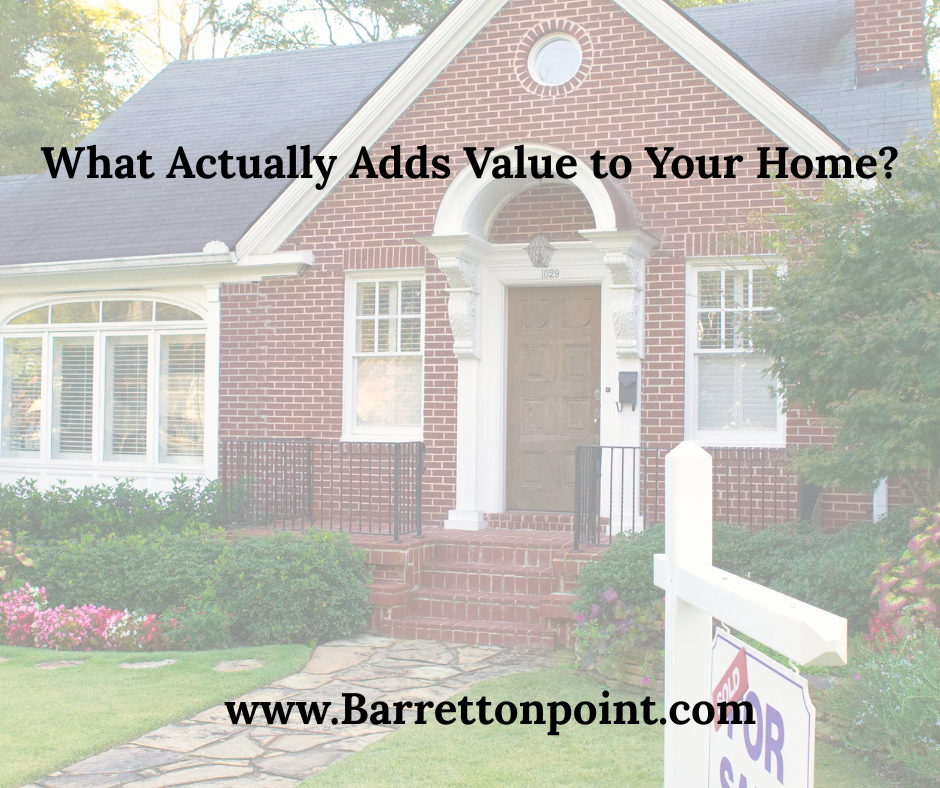
“Will this update increase my home’s value?”
It’s one of the most common — and most misunderstood — questions we hear.
The reality is simple:
Not all money spent on your home increases its market value.
Some updates protect your value.
Some can elevate your value category.
And some simply make your home more enjoyable while you live there.
Understanding the difference is what allows us to price strategically — not emotionally.
Let’s walk through it.
1. Maintenance: Protecting the Value You Already Have
Maintenance keeps your home functioning the way buyers expect.
If major systems are outdated or failing, your home may lose value.
If they’re updated, your home typically meets market expectations — not exceeds them.
That said, there’s an important nuance:
If competing homes still have older systems, and yours does not, your home becomes more desirable.
It may not increase your appraised value above the neighborhood range — but it can:
Increase buyer confidence
Reduce inspection concerns
Narrow negotiation points
Attract stronger offers
Common Maintenance Items
Roof replacement
HVAC replacement
Water heater replacement
Electrical panel updates
Plumbing repairs or line replacement
Septic repair or replacement
Foundation repair
Crawlspace encapsulation
Standard window replacement
Exterior repaint
Replacing carpet with similar-grade flooring
Mid-range appliance replacement
Here’s something sellers don’t often realize, and it just isn’t fair. Deferred maintenance is penalized more heavily than updates are rewarded.
Buyers will discount significantly for an old roof — but they won’t necessarily pay a premium for a new one. A new roof protects value. An old roof reduces it.
That distinction matters.
2. Improvements: Changing the Category of the Home
Improvements alter square footage, layout, functionality, or overall quality level.
These updates can increase value — but rarely dollar-for-dollar.
A common misconception is:
“We spent $40,000, so we should get $40,000 more.”
Market value doesn’t work that way.
Return on investment depends on:
Buyer demand
Comparable sales
Whether the update moves the home into a different category
Whether the neighborhood supports that level of improvement
True Improvements May Include:
Adding a bathroom
Finishing a basement
Building an addition
Expanding the kitchen footprint
Adding heated and cooled living space
Adding a garage where none existed
Converting attic space into living area
Creating covered outdoor living space
When improvements change how the home functions and align with the surrounding area, they can support a higher price bracket.
But here’s the key:
You can over-improve for the neighborhood.
If surrounding homes sell around $325,000, installing a luxury-level kitchen may make yours the nicest — but not necessarily $60,000 more valuable.
Neighborhood price ceilings are real.
3. Location Still Drives Value
Even significant upgrades can’t override location.
Value is heavily influenced by:
School zone demand
Neighborhood desirability
Traffic patterns
Rural vs. city setting
Proximity to commercial areas
Micro-location differences
Proximity to a busy or high-traffic road
Two nearly identical homes can sell for different amounts simply because one sits on a quiet cul-de-sac while another is near a heavily traveled road.
Buyers consider:
Noise levels
Ease of pulling in and out of the driveway
Safety for children and pets
Privacy
In many parts of Johnson City and the surrounding Tri-Cities, small location differences can create noticeable price differences — even within the same subdivision.
Upgrades matter.
But location sets the foundation.
4. Layout Often Matters More Than Finishes
Sellers often focus on:
Granite vs. quartz
Cabinet color
Light fixtures
Buyers focus on:
Functional flow
Bedroom placement
Primary suite layout
Laundry room location
Overall usability
A strong layout with average finishes often outperforms beautiful finishes with a challenging floor plan.
Function drives value more than décor.
5. Emotional Value vs. Market Value
This is where pricing can become complicated.
There are updates that improve appeal — but do not necessarily increase appraised value.
Commonly Overestimated Items
Fresh interior paint
Landscaping and flower beds
Custom built-ins
High-end appliances (in non-luxury homes)
Smart home features
Finished garage (when buyers expect parking)
Hot tubs
Above-ground pools
What you originally paid
What you need to net
Some of these can even narrow your buyer pool.
Pools and hot tubs, for example, may increase maintenance costs or insurance concerns. Highly customized décor may feel limiting to buyers. Unpermitted additions create perceived risk.
Buyers mentally price in risk.
What feels like a feature to one seller may feel like future expense to a buyer.
6. Neutral Design Increases Sellability
If your goal is maximum market appeal, neutral almost always wins.
That doesn’t mean boring. It means broadly marketable.
Before listing, consider:
Repainting bold or dark walls
Toning down highly personalized styles
Simplifying décor
Creating a clean, light feel
The goal is to help buyers envision themselves in the home — not feel like they’re walking into someone else’s design choices.
7. Market Conditions Change Everything
In a highly competitive seller’s market, buyers may overlook cosmetic flaws.
In a balanced or slower market, buyers become more selective. Deferred maintenance is scrutinized. Neutral design becomes more important.
Pricing strategy should reflect current conditions — not headlines from last year.
8. Appraisal Reality
Even if a buyer loves your home, the lender requires an appraisal.
If the home doesn’t appraise:
Price renegotiation may happen
The buyer may need to bring additional cash
Or the deal can fall apart
Pricing must work for:
✔ Buyers
✔ Appraisers
✔ The market
9. Time on Market Impacts Perception
Overpricing to “test the market” often leads to:
Extended days on market
Price reductions
Buyer hesitation
Lower final sale price
Strategic pricing at launch creates leverage.
Chasing the market downward weakens your position.
What Actually Moves the Needle?
In today’s Tri-Cities market, value is driven by:
Recent comparable sales
Condition relative to competition
Functional layout
Location
Market timing
Smart price positioning
Professional marketing
Maintenance protects value.
Improvements can support placement in a higher price range.
Emotional attachment does not determine price.
When all three align — condition, positioning, and pricing — that’s when strong offers happen.
Selling isn’t about squeezing every dollar out of updates. It’s about understanding how buyers think, how appraisers measure value, and how to position your home so it stands confidently against the competition.
That’s where strategy replaces emotion.
And that’s where experience matters.
If you’re considering selling and want a clear, data-driven plan tailored to your home and your neighborhood, we’d love to walk through it with you.
Because the goal isn’t just to list your home.
It’s to position it on point from day one.